Theoretical vs actual RTP: how far real results can stray
The RTP found in slot rules is the theoretical RTP. This is the figure the game is designed to return over an extremely large number of spins. The actual RTP is the figure returned over a period of play.
In play, these figures can be very far apart. With millions of spins, they converge. Here we will see just how far apart they can be, using the method the UK Gambling Commission gives casinos for checking their games.
 By Owen Sheridan · Updated
Theoretical vs actual RTP: the difference
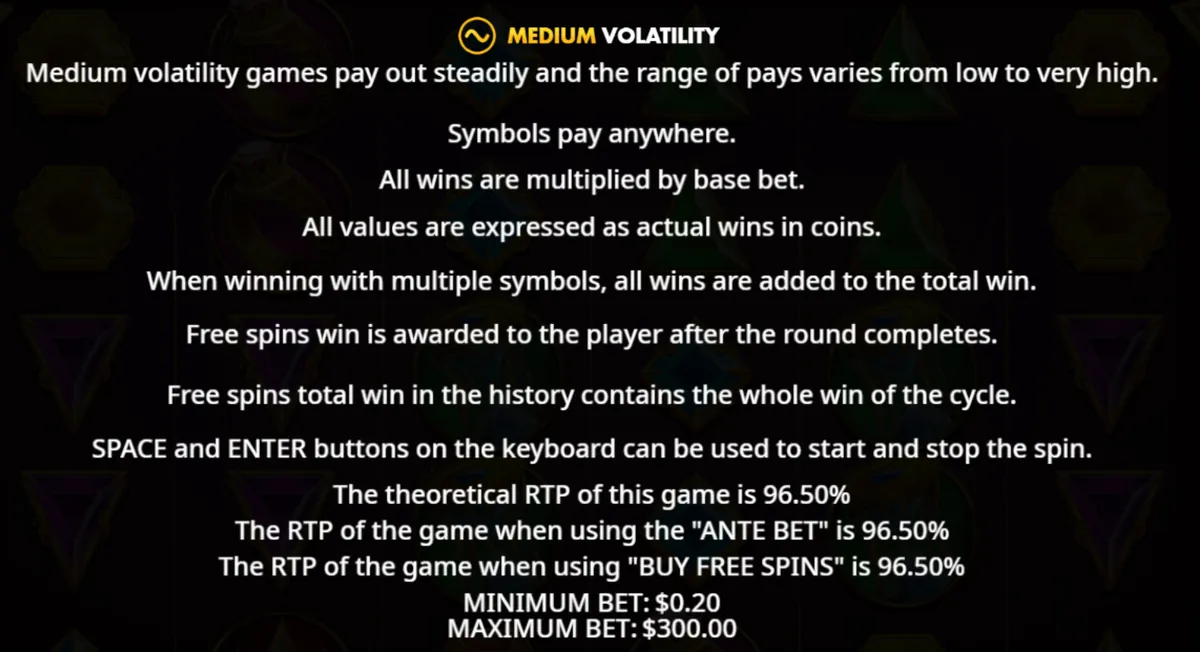
Theoretical RTP is a design figure. The developer sets the maths, and a test lab checks it before release in regulated markets. The figure goes into the game's rules. Gates of Olympus at Winna states 96.50%.
Actual RTP is a result. This is computed as total win divided by total turnover, for a given period.
For one player, or one session, actual RTP can be 0% or 300%. Across all players and months of play, actual RTP is within a point or so of the designed figure.
Where to find the theoretical figure in any game: how to check slot RTP.
Theoretical and actual RTP in the regulator's words
The UK Gambling Commission's guidance for casinos gives the definitions in one place.
- Theoretical RTP
Designed return of a game, and the RTP shown to the player in the rules.
- Actual RTP
Total win divided by total turnover of the live game, for a past period.
- Turnover and win
Turnover is all stakes, including winnings bet again; win is all prizes paid. Turnover minus win is what the casino keeps.
- Volatility
Usually the game's standard deviation. High volatility means infrequent, large prizes and a wider tolerance.
How far actual RTP strays from the theoretical RTP
The Commission's guidance shows what the range of normal results is for a game with a standard deviation of 5.6. The same sum works for any number of spins.
With a 96% game and that volatility, 1,000 spins at €1 would normally return anywhere from about €613 to €1,307. Nothing is wrong with the game at either end.
With 100 spins, the range is so wide it says nothing: from losing everything to winning and doubling the stake. Only past 100,000 spins does it begin to close to a few points.
Real sessions are also lopsided. Most short sessions end below the RTP and a few large wins pull the average above it.
Where 95% of results land on a 96% slot
- 100 spins0% to 205.8%
- 1,000 spins61.3% to 130.7%
- 10,000 spins85% to 107%
- 100,000 spins92.5% to 99.5%
- 1,000,000 spins94.9% to 97.1%
Standard deviation 5.6 as in the Commission's example. 1.96 x 5.6 / square root of number of spins. The dark line is the theoretical 96%. A higher volatility slot would spread further.
How actual RTP is calculated, with the regulator's example
The Commission's own example: a game designed at 91.68% takes £1,200,000 in stakes in a month and pays out £1,085,000.
1,085,000 / 1,200,000 = 0.9042, therefore actual RTP is 90.42%. That is below designed RTP, but by itself it is not an indication of an issue.
After 400,000 games, the range for that game is 1.75 points either side: 89.93% to 93.43%. With 90.42% in that range, the game is performing as expected.
The Commission's page: How to calculate return to player (RTP).
| Games played | Range either side |
|---|---|
| 50,000 | 4.91 points |
| 100,000 | 3.47 points |
| 200,000 | 2.45 points |
| 400,000 | 1.74 points |
| 1,000,000 | 1.10 points |
Actual RTP cannot make up for a low theoretical RTP
Luck does even out. The version does not. After a million spins, the range of results would be about a point either side of the theoretical RTP, so this figure decides nearly everything.
Wanted Dead or a Wild runs at 96.38% at six of the ten casinos we review, and at 92.33% at Kings Game. That 4-point gap is wider than the entire range of luck at a million spins. Which version each casino runs: best payout online casinos.
Why the different versions exist: slot RTP versions.
Wanted Dead or a Wild: average kept on €100,000 of spins
- 96.38% · six casinos€3,620.00
- 94.55% · three casinos€5,450.00
- 92.33% · Kings Game€7,670.00
After 100,000 spins, luck still moves the results by about 3.5 points either way; the gap between the versions does not move.
Actual RTP and the idea that a slot is due to pay
A slot that has paid little lately is not due to catch up. Each spin of a game is independent of all the other spins, and a game of chance has no past, no future; it all depends on the current spin.
The Commission's player guide says the RTP is an average over a large number of games, not something you should expect in one session. An 85% machine does not pay 85p of every £1 while you play.
A game adjusting to past results is called compensated. Its remote standards ban these games online: "Adaptive behaviour (that is, a compensated game) is not permitted."
More info on streaks: hot and cold slots.
| Belief | What the maths says |
|---|---|
| A cold slot is due a win | Each spin has the same odds; no catching up |
| My session shows the real RTP | A session is far too short to measure it |
| Casinos lower the RTP after a win | The version is fixed in the game build |
| A high RTP means I will win | It means you lose less on average |
Using theoretical RTP when actual results vary
Since sessions can't show real RTP, you're left with the theoretical figure. You can use it to pick the casino and game, and size the session for swings.
Swings depend on volatility more than RTP: RTP vs volatility.
How often a slot pays at all is a separate figure: hit frequency in slots.
- Read the theoretical RTP
Always check the game rules before playing.
- Pick the top version
Compare with the studio's top version and play where it runs.
- Budget for the range
After 1,000 spins, expect results well below the game's RTP; they are normal.
Theoretical vs actual RTP FAQ
What is the difference between theoretical and actual RTP?
Theoretical RTP is the return figure listed in a game's rules. Actual RTP is total win divided by total staked in a given period.
Why is my actual RTP so much lower than the slot's RTP?
A session is too short. In a 1,000 spin session on a 96% RTP game of moderate volatility, expect 95% of sessions to end between about 61% and 131%.
How many spins does it take to reach the theoretical RTP?
Hundreds of thousands. At 1,000,000 spins the normal range is still about 1.1 points either side on the regulator's example game.
How is actual RTP calculated?
Divide total win by total turnover. In the UK Gambling Commission's example, total win was £1,085,000 and total turnover was £1,200,000, giving an RTP of 90.42%.
Can a casino change the actual RTP?
For a given game, an operator can choose a lower version, thus lowering the theoretical RTP. Under UK rules, it is banned for a game to adjust itself based on outcomes.
Is a slot with high actual RTP lately a good pick?
No. Past outcomes don't change the odds of the next spin. Pick a game based on the theoretical RTP of the version.